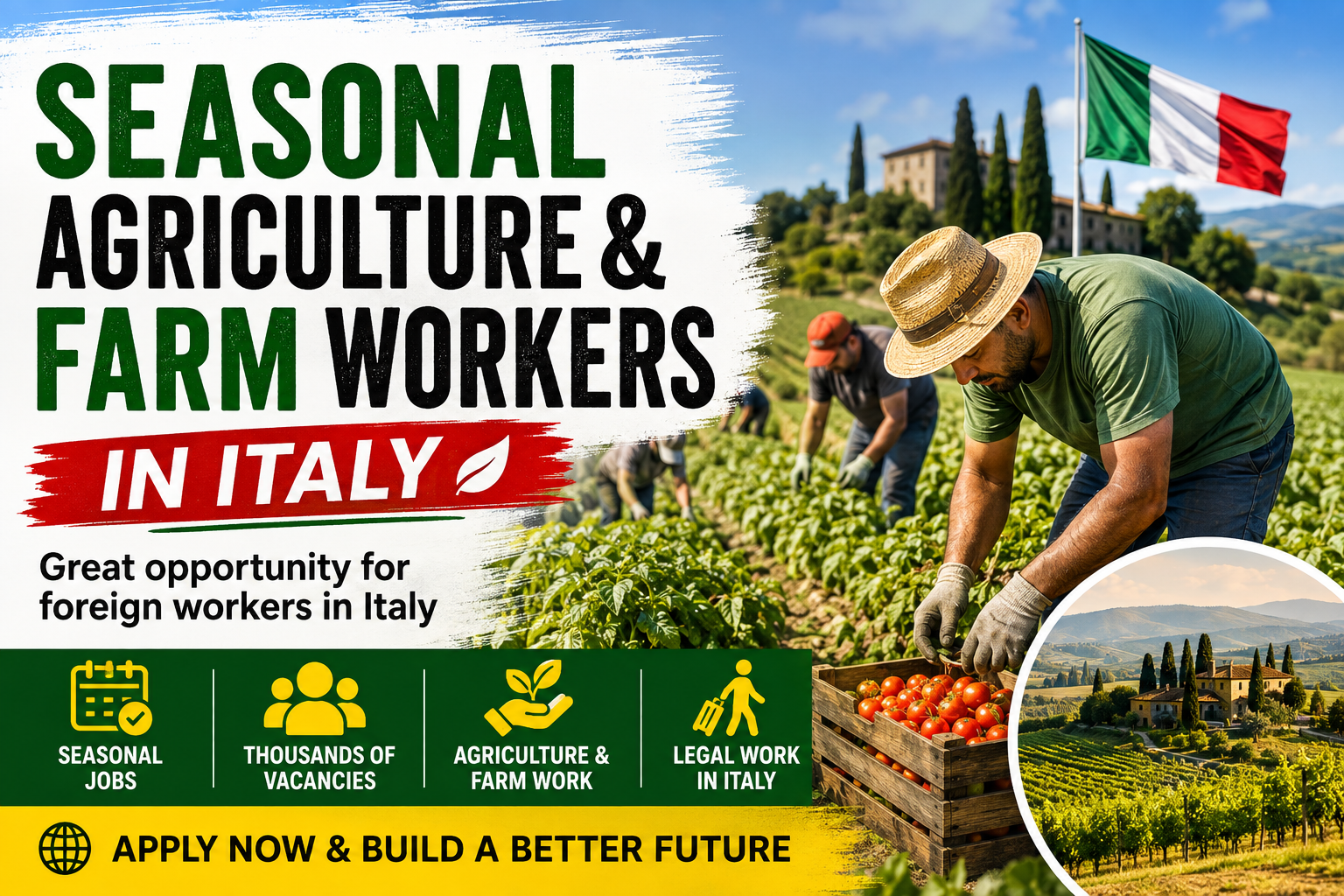
Italy’s agri-food sector stands as one of the most vital engines of the European economy. From the vineyards of Tuscany and Piedmont to the olive groves of Puglia and the citrus orchards of Sicily, Italian agriculture relies on a massive seasonal workforce to harvest premium crops year-round.
Because domestic labor alone cannot satisfy the high demand during peak harvest cycles, Italy relies on foreign seasonal labor supported by government-regulated work quotas known as the Decreto Flussi. For international job seekers, seasonal farm work represents one of the most accessible and legally secure entry points into the European Union.
This comprehensive guide covers everything you need to know about seasonal agricultural jobs in Italy, including crop cycles, expected earnings, housing rights, application procedures, and legal visa pathways.
Why Italy Relies on Foreign Seasonal Farm Workers
Agricultural production operates on strict biological timelines. When crops reach peak maturity, harvesting must occur rapidly to prevent crop loss and preserve product quality for global export.
+-----------------------------------------------------------------------+
|                 ITALIAN AGRICULTURAL WORKFORCE PIPELINE                |
+-----------------------------------------------------------------------+
|  Core Industry Drivers       |  Primary Harvest Seasons               |
|  • Domestic Labor Shortages  |  • Wine Grapes (September – October)  |
|  • Perishable Crop Cycles    |  • Olives (October – December)        |
|  • High Export Demands       |  • Citrus Fruits (November – May)     |
+-----------------------------+-----------------------------------------+
                                  |
                                  v
+-----------------------------------------------------------------------+
|                       LEGAL ENTRY FRAMEWORK                           |
|  • Decreto Flussi Quotas   • Employer SUI Applications   • Up to 9 Months|
+-----------------------------------------------------------------------+
Key Advantages for Foreign Applicants
- High Quota Allocation: The Italian government consistently reserves tens of thousands of entry permits exclusively for agricultural seasonal work under multi-year programming decrees.
- No Formal Degree Prerequisites: Hiring prioritizes physical stamina, reliability, and basic agricultural know-how rather than higher education degrees or advanced language proficiency.
- Protected Worker Rights: Foreign seasonal farm workers under official contracts enjoy full parity with Italian citizens regarding minimum wages, rest periods, and workplace safety standards under national collective labor agreements.
Seasonal Crop Cycles and Key Agricultural Regions
Understanding the seasonal calendar helps farm workers plan their job applications to align with peak regional hiring windows across Italy.
1. Wine Grape Harvest (Vendemmia)
The grape harvest is one of the most labor-intensive periods in Italian agriculture, generating thousands of short-term jobs across major wine-producing territories.
- Peak Season: September to late October.
- Primary Regions: Veneto, Tuscany, Piedmont, Emilia-Romagna, and Sicily.
- Typical Roles: Grape pickers, sorters, tractor operators, and winery cellar assistants.
2. Olive Harvest (Raccolta delle Olive)
Italy produces premium extra virgin olive oils, requiring meticulous manual and semi-mechanized harvesting methods.
- Peak Season: October through December.
- Primary Regions: Puglia, Calabria, Sicily, Tuscany, and Umbria.
- Typical Roles: Net placement crews, shaker-machine operators, and transport laborers.
3. Citrus & Fruit Harvesting
Southern Italian regions produce vast quantities of oranges, lemons, blood oranges, and stone fruits for domestic consumption and international export.
- Peak Season: November through May (Citrus); June through August (Summer Fruits like peaches and tomatoes).
- Primary Regions: Sicily, Calabria, Campania, and Basilicata.
- Typical Roles: Pickers, field sorters, and crate packers.
Salary Benchmarks and Farm Worker Benefits
Agricultural wages in Italy are regulated by National Collective Bargaining Agreements (CCNL) alongside regional farm sector agreements.
| Role / Agricultural Sector | Estimated Monthly Net Pay | Typical Benefits & Perks |
| Seasonal Crop / Fruit Picker | €1,000 – €1,600 | Subsidized or Free Housing / Meals |
| Tractor Operator / Machinery Driver | €1,400 – €2,000 | Higher Hourly Rate / Overtime Pay |
| Vineyard Cellar & Sorting Assistant | €1,200 – €1,700 | On-the-job Technical Skill Training |
| Field Supervisor / Team Lead | €1,600 – €2,200 | Multi-Season Contract Renewals |
Note: Base salaries vary based on hourly rates, weekly overtime, and specific provincial agreements.
How the Decreto Flussi System Works for Farm Workers
The primary legal mechanism for non-EU citizens to enter Italy for seasonal farm work is the Decreto Flussi quota system.
+--------------------------------------------------------------------+
|               SEASONAL AGRICULTURAL VISA ROADMAP                   |
+--------------------------------------------------------------------+
|  [Step 1] Match with a Registered Italian Agricultural Employer      |
|                            │                                       |
|                            ▼                                       |
|  [Step 2] Employer Files "Nulla Osta" on Official SUI Click-Day    |
|                            │                                       |
|                            ▼                                       |
|  [Step 3] Obtain Seasonal Work Visa at the Italian Consulate        |
|                            │                                       |
|                            ▼                                       |
|  [Step 4] Travel to Italy & Sign Residence Contract (Permesso)     |
+--------------------------------------------------------------------+
- Employer Sponsorship: An Italian farm owner or agricultural cooperative must submit an online application (Nulla Osta) through the Ministry of Interior’s Sportello Unico per l’Immigrazione (SUI) portal.
- Click-Day Timings: Applications are time-stamped and allocated on a first-come, first-served basis during designated government “click days”.
- Visa Issuance & Permit Duration: Once the Nulla Osta (work authorization) is granted, the worker applies for a Type D national seasonal visa, permitting employment for up to 9 months within a 12-month period.
- Pathway to Multi-Year Rights: Workers who complete seasonal contracts smoothly and return home on time build an established track record, gaining priority access for subsequent harvest years or potential conversion to non-seasonal work permits.
Frequently Asked Questions (FAQs)
Can seasonal agricultural permits be extended or renewed?
A seasonal work visa allows employment up to a maximum of 9 months per year. While workers must return home after the contract ends, completing a season lawfully grants strong preference for returning the following year or converting to a multi-year permit after repeated successful stays.
Do farm employers provide housing for seasonal workers?
Yes. Under Italian immigration law, employers sponsoring seasonal workers must demonstrate suitable housing arrangements (Idoneità Alloggiativa), which are frequently provided directly by farm owners or local agricultural associations.
Do I need to speak fluent Italian to apply for farm jobs?
No. Advanced language skills are generally not required for field work or crop processing, though learning basic conversational Italian commands helps with workplace safety and daily farm communication.
Applying for seasonal agriculture and farm worker positions in Italy offers foreign labor a structured, legal pathway to gain European employment experience. By matching with authorized farm employers and timing applications around official Decreto Flussi quota windows, international workers can build a stable, rewarding seasonal career.