Last updated: August 2026
Italy’s farms, orchards, and vineyards hire tens of thousands of foreign workers every year, and for many job seekers in Asia, Africa, and Eastern Europe, farm work jobs in Italy are one of the most realistic routes into legal European employment. This guide walks through how the system actually works in 2026 — from the government quota that controls who can come, to real salary ranges, application steps, and the scams to avoid along the way.
This article is written for general informational purposes. Always confirm current rules on Italy’s official immigration portal before applying, and treat it as a starting point for your own research rather than a substitute for professional immigration advice.
Table of Contents
- What Are Farm Work Jobs in Italy?
- Who Can Apply for Italian Farm Work?
- The Decreto Flussi: Italy’s Work Visa Quota System
- Farm Work Salaries in Italy
- Best Regions for Farm Work in Italy
- Step-by-Step: How to Apply for a Farm Job in Italy
- Documents You Will Need
- Living and Working Conditions
- Common Scams to Avoid
- Frequently Asked Questions
What Are Farm Work Jobs in Italy?
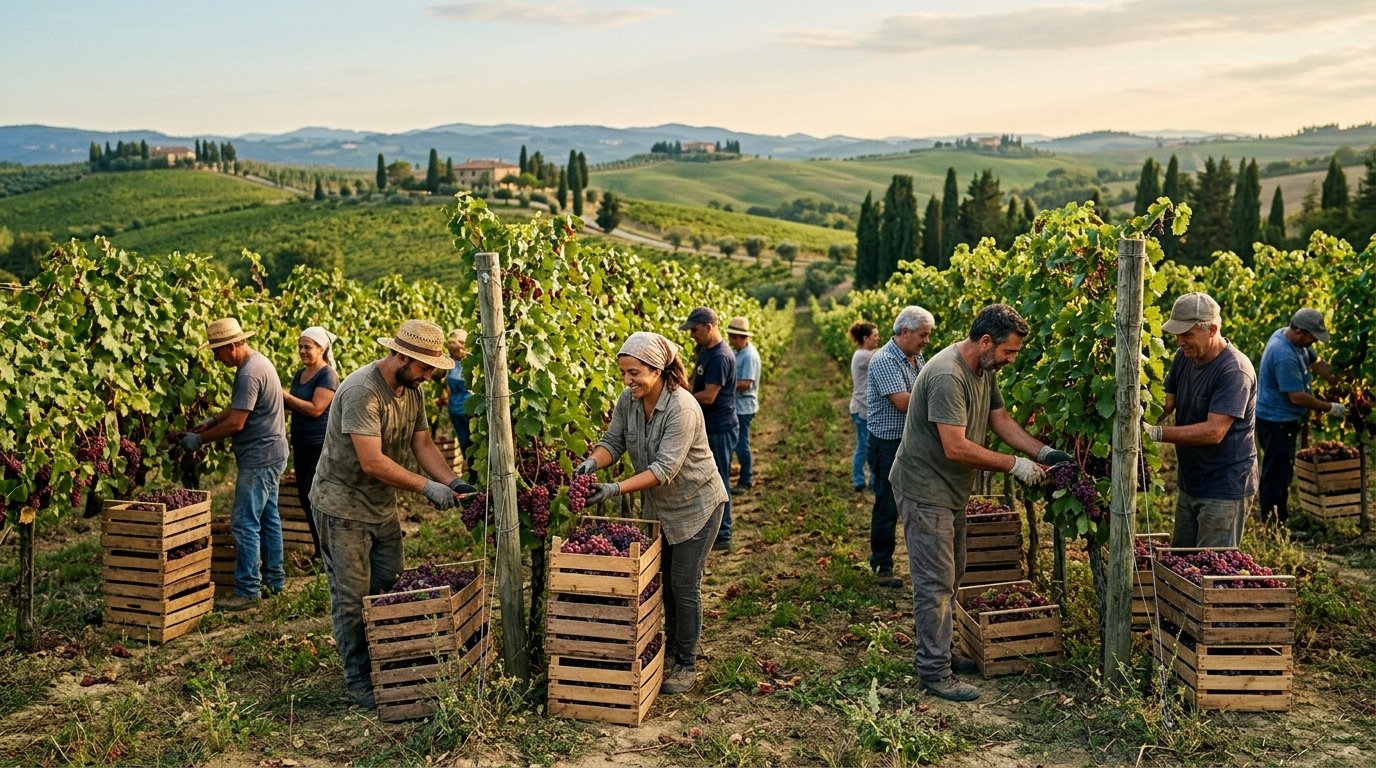
Farm work jobs in Italy, known locally as lavoro agricolo stagionale (seasonal agricultural work), cover roles such as fruit and vegetable picking, grape harvesting, olive picking, greenhouse work, and general labor on livestock and dairy farms. These jobs are tied to the growing and harvest seasons, which is why they are officially classified as seasonal work rather than permanent employment.
Because Italian agriculture depends heavily on manual labor during harvest peaks, the country has built a formal legal channel — the Decreto Flussi — that allows Italian employers to sponsor non-EU workers for these roles each year.
Who Can Apply for Italian Farm Work?
Almost all non-EU nationals are technically eligible to apply for a seasonal agricultural visa, provided they have a formal job offer from an Italian employer. In practice, large numbers of successful applicants in recent years have come from Bangladesh, India, Pakistan, Nepal, Sri Lanka, Senegal, Tunisia, Morocco, and several Eastern European and Latin American countries.
There is no general requirement for prior farming experience, though some employers prefer candidates with relevant background. What matters most for the legal pathway is a genuine, employer-sponsored job offer — individuals cannot simply apply for a seasonal visa on their own initiative.
The Decreto Flussi: Italy’s Work Visa Quota System
The Decreto Flussi (“Flow Decree”) is the legal backbone of Italy’s foreign labor system. It is a government decree that sets an annual cap on how many non-EU workers can legally enter Italy for employment, broken down by sector and job type.
Italy’s Council of Ministers approved a three-year Decreto Flussi framework covering 2026 through 2028, authorizing around 497,550 total work visas over the period, split between roughly 230,550 slots for non-seasonal and self-employed work and 267,000 slots for seasonal work in agriculture and tourism. Within that plan, 40,075 seasonal-work visa places were confirmed for 2026, part of an overall ceiling of roughly 164,850 total entries for the year, and employers had to pre-fill applications between late October and early December 2025 before formal “click days” opened in January 2026 for agricultural roles.
Key Points About the Quota System
- Employers, not individual workers, submit the official request (called a nulla osta) during a designated “click day.”
- The maximum duration of a seasonal work permit was extended to up to nine months within any 12-month period, bringing Italy closer in line with other major seasonal-work destinations in Europe.
- A portion of each year’s seasonal quota is reserved for workers who have already worked legally in Italy at least once in the past five years, allowing them a faster multi-year clearance to return.
- Applications submitted outside the official quota and click-day system are not valid, no matter what an agent or recruiter may claim.
Because the process is entirely employer-driven, the single most important step for any job seeker is securing a written, verifiable job offer from a registered Italian employer or an authorized recruitment agency before anything else happens.
Farm Work Salaries in Italy
Wages for seasonal agricultural work in Italy are governed by national and regional collective labor agreements, so pay varies by region, crop, and employer — but reported salary ranges for seasonal workers generally fall between roughly €1,200 and €2,500 or more per month, depending on hours, overtime, and location.
A few practical notes on pay:
- Wages are usually calculated hourly or on a piece-rate basis (paid per crate or kilogram harvested) during peak season.
- Working hours typically run 8–10 hours a day, six days a week during peak harvest, with overtime generally paid at a higher rate.
- Employers are legally required to register workers and pay through official channels — cash-in-hand arrangements outside this system are a red flag, not a benefit.
- Deductions may apply for shared accommodation or meals if these are provided by the employer; always ask for this in writing before accepting an offer.
Best Regions for Farm Work in Italy
Italy’s agricultural sector is spread across the country, but a few regions consistently offer the highest volume of seasonal openings:
- Puglia – Olive groves, tomatoes, and grapes; one of Italy’s largest agricultural labor markets.
- Sicily – Citrus fruit, olives, and vegetables, with a long harvest season due to the mild climate.
- Emilia-Romagna – Fruit orchards, dairy farms, and food-processing-linked agriculture.
- Veneto and Piedmont – Vineyards and grape harvesting, especially in autumn.
- Campania – Tomatoes and vegetables, with strong demand for greenhouse workers.
Regional demand shifts with the harvest calendar, so timing your application to match the specific crop season in your target region improves your chances significantly.
Step-by-Step: How to Apply for a Farm Job in Italy
- Find a legitimate employer or licensed agency. Search verified job boards, Italian agricultural employer associations, or recruitment agencies registered with Italian authorities. Never pay an upfront “guarantee” fee.
- Secure a written job offer. This is the foundation of your entire application — without it, there is no legal pathway.
- Wait for your employer to file the nulla osta. Your employer submits the sponsorship request to Italian immigration authorities during the official pre-filing window and click day.
- Collect your visa approval and apply at the consulate. Once the nulla osta is granted, you apply for your entry visa at the Italian embassy or consulate in your home country.
- Travel and register in Italy. After arrival, you’ll typically need to sign your residence permit application (permesso di soggiorno) within eight days.
Documents You Will Need
- Valid passport (with sufficient remaining validity)
- Signed job offer or employment contract
- Nulla osta (work authorization) issued to your employer
- Visa application form and passport-style photos
- Proof of accommodation in Italy
- Health insurance or proof of enrollment in the Italian health system, if required
Requirements can shift slightly year to year, so always check the current checklist on Italy’s official immigration portal or with the consulate handling your application.
Living and Working Conditions
Most seasonal farm workers in Italy are housed in shared accommodation with other seasonal staff, and conditions can vary widely depending on the employer and the region. Rural postings can feel isolated, particularly for first-time workers far from home, so it’s worth asking prospective employers directly about:
- Type and cost of accommodation
- Distance from the farm to shops, transport, and healthcare
- Whether meals are provided or self-funded
- Contract length and possibility of renewal
Reputable employers are generally willing to answer these questions clearly before you commit to travel.
Common Scams to Avoid
Because farm and fruit-picking jobs in Italy attract a large number of foreign applicants, they also attract a significant number of fraudulent “agents.” A recurring warning across immigration resources is that any recruiter demanding €500–€5,000 in advance “processing fees” to guarantee a permit is almost certainly running a scam, since legitimate employers do not charge workers for the authorization process.
Protect yourself by following these rules:
- Never wire money to secure a “guaranteed” visa or job.
- Verify any agency’s registration before paying any legitimate service fee.
- Cross-check job offers directly with the employer where possible.
- Be skeptical of offers that promise guaranteed placement without an interview or documentation.
- Consult Italy’s official immigration portal for verified information rather than relying solely on social media groups.
Frequently Asked Questions
Is farm work in Italy open to workers without experience? Yes. Most seasonal agricultural roles do not require prior farming experience, though physical fitness and willingness to work long hours during harvest are expected.
How long does a seasonal work permit last? As of 2026, seasonal work permits can last up to nine months within any 12-month period.
Can I apply for a farm job in Italy without a sponsor? No. All entries under the Decreto Flussi system must be employer-sponsored, meaning individuals cannot apply independently without a confirmed job offer.
What is the best time of year to apply? Applications generally need to align with Italy’s official pre-filing period, which typically runs in the autumn before the following year’s harvest season, ahead of the January “click day” for agricultural roles.
Are there opportunities to return in future seasons? Yes — a portion of the annual quota is set aside for workers who have already worked legally in Italy within the past five years, making it easier for them to return in future seasons.