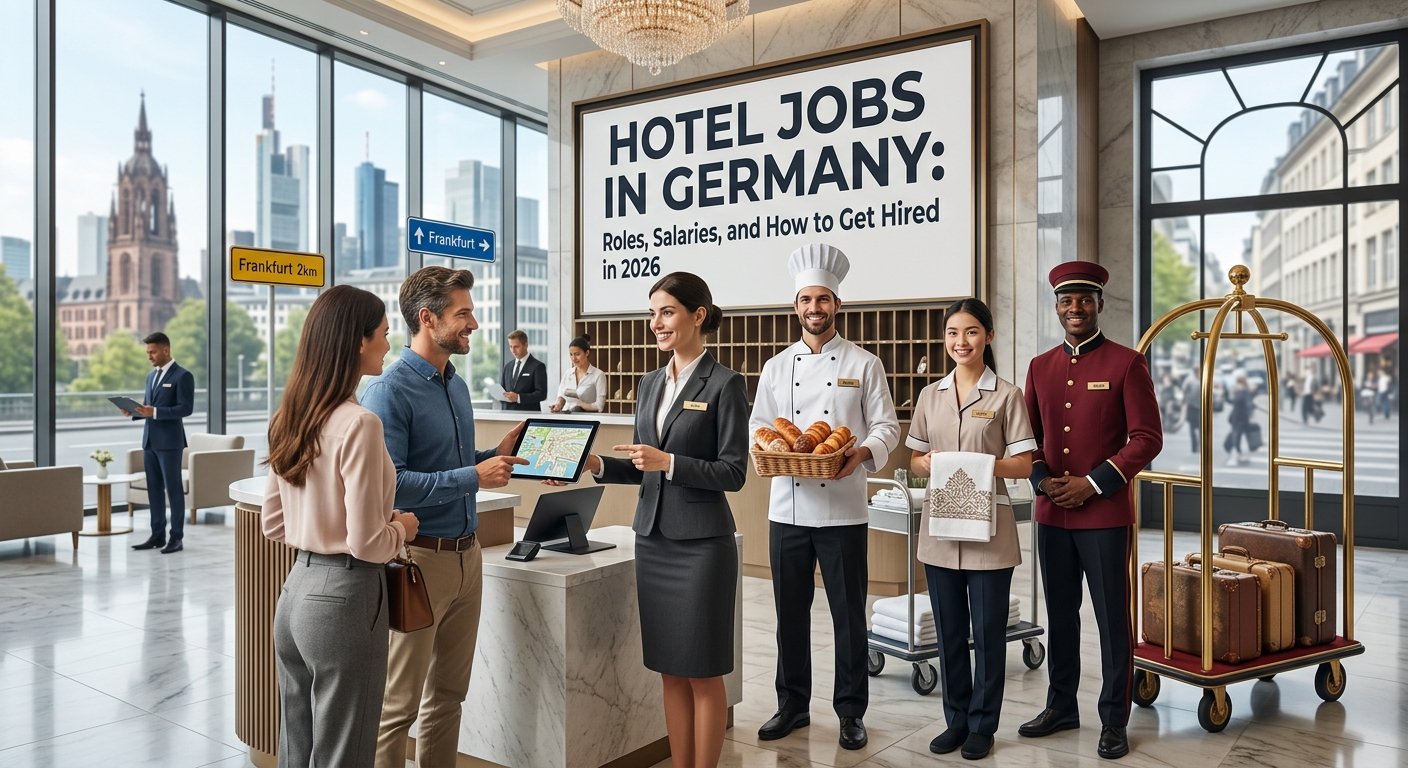
Germany’s hospitality sector is short-staffed and actively hiring — from big-city business hotels in Frankfurt and Munich to family-run guesthouses in the Bavarian Alps. If you’re weighing a move into hotel work, or relocating from abroad to take one up, this guide walks through the real roles on offer, what they pay, what qualifications actually matter, and the visa route that applies to you.
This article draws on publicly available German labor market data (Bundesagentur für Arbeit), industry association reporting (DEHOGA), and standard visa requirements published by German missions abroad. It’s written for job seekers, career changers, and international applicants comparing Germany against other hospitality markets.
Why Germany’s Hotel Industry Is Hiring
Germany’s hotel and restaurant association (DEHOGA) has reported persistent staff shortages since the pandemic recovery period, particularly in housekeeping, kitchen, and front-of-house roles. Tourism has rebounded strongly in cities like Berlin, Hamburg, and Cologne, and trade-fair hubs such as Frankfurt and Düsseldorf see seasonal spikes tied to major exhibitions. That combination — recovering demand plus a shrinking domestic labor pool — is why many hotels, especially mid-size and independent properties, are open to hiring internationally and offering training-based entry points for candidates without formal hospitality qualifications.
Popular Hotel Job Roles in Germany
Front Office and Guest Services
Front desk agents, guest relations officers, and night auditors handle check-in/check-out, guest queries, and reservations. German-language ability is usually expected here, since it’s the most guest-facing role, though English-speaking properties in major cities are more flexible.
Housekeeping and Room Attendants
Room attendants, housekeeping supervisors, and laundry staff keep the property running. This is one of the easiest entry points for newcomers and often the most in-demand role, with lower language barriers.
Food and Beverage Service
Waitstaff, bartenders, banquet staff, and restaurant supervisors work hotel restaurants, bars, and event spaces. Larger hotels with conference facilities need extra banquet staff seasonally.
Kitchen and Culinary Roles
Commis chefs, sous chefs, pastry chefs, and kitchen porters are consistently in demand. Trained chefs with recognized culinary qualifications have strong prospects, and some hotel groups sponsor visas specifically for kitchen roles.
Hotel Management and Administration
Front office managers, F&B managers, revenue managers, and general managers typically require several years of hospitality experience plus, often, a hospitality management degree or equivalent.
Concierge and Guest Experience
Found mainly in 4- and 5-star properties, concierge roles need strong local knowledge, multiple languages, and a service-first attitude.
Salary Expectations for Hotel Jobs in Germany
Pay varies by city, hotel category, and role. As a general guide for 2026:
- Housekeeping / room attendants: €1,900–€2,300 gross per month
- Front desk agents: €2,100–€2,700 gross per month
- Waitstaff / bartenders: €2,000–€2,500 gross per month (plus tips)
- Commis / line chefs: €2,300–€2,900 gross per month
- Sous chefs: €2,900–€3,600 gross per month
- Front office / F&B managers: €3,500–€4,800 gross per month
- General managers: €5,000+ gross per month, varying widely by property size
Germany’s national minimum wage sets a legal floor for entry-level positions, and it’s adjusted periodically — always check the current rate before comparing offers. Salaries in Munich, Frankfurt, and Hamburg tend to run higher than in smaller towns, but so does the cost of living.
Qualifications and Skills Employers Look For
Most hotel employers in Germany weigh three things: relevant experience, language ability, and, for skilled roles, formal training.
- German language: Not always mandatory for kitchen or housekeeping roles, but strongly preferred for guest-facing positions. B1-level German meaningfully widens your options.
- English language: Common requirement in international chain hotels, especially in major cities.
- Vocational training (Ausbildung): Germany’s dual vocational training system produces most of its skilled hospitality workers. A recognized culinary or hospitality Ausbildung, or an equivalent foreign qualification, is a strong asset.
- Prior experience: Even 6–12 months of hotel experience abroad can make a real difference for mid-level roles.
- Soft skills: Reliability, punctuality, and guest-service orientation are consistently cited by German employers as deciding factors between similarly qualified candidates.
Visa and Work Permit Routes for International Applicants
If you’re applying from outside the EU/EEA, you’ll generally need a job offer first, then a visa tied to that offer. The main routes relevant to hotel jobs are:
- EU Blue Card: For roles meeting a minimum salary threshold, mainly relevant to management-level hospitality positions.
- Skilled Worker Visa (Fachkräfte-Einwanderungsgesetz): Covers workers with a recognized vocational qualification matching the job, which applies to many trained chefs and hospitality specialists.
- Ausbildung (training) visa: For candidates entering Germany specifically to complete vocational training in a hotel or restaurant, common for entry-level applicants without prior formal qualifications.
- Working Holiday routes: Available to citizens of a small number of countries with bilateral agreements with Germany, offering short-term flexibility.
EU/EEA and Swiss citizens can work in Germany without a visa. Requirements change periodically, so confirm current criteria with the German embassy or consulate in your country before applying.
How to Apply for Hotel Jobs in Germany
- Build a German-style CV (Lebenslauf). Include a professional photo (standard practice in Germany), clear work history in reverse-chronological order, and language proficiency levels.
- Target the right channels. DEHOGA’s job boards, major hotel group career pages (Accor, Marriott, Lindner, Steigenberger), and general job portals like StepStone and Indeed Germany all list hospitality roles regularly.
- Get qualifications recognized. If you hold a foreign vocational or culinary qualification, check recognition through Germany’s ZAB (Zentralstelle für ausländisches Bildungswesen) — this can be decisive for skilled-worker visa eligibility.
- Prepare for a practical interview. Hotel employers in Germany often include a trial shift or practical assessment alongside the standard interview.
- Line up your visa paperwork early. Processing times vary by country and visa type, so start the process as soon as you have a written job offer.
Frequently Asked Questions
Do I need to speak German to work in a hotel in Germany? Not always. Kitchen, housekeeping, and back-of-house roles are often open to non-German speakers, especially in international hotel chains. Front-of-house roles usually require at least conversational German.
What is the minimum salary for hotel jobs in Germany? Entry-level roles are governed by Germany’s national minimum wage, with actual pay varying by role, city, and hotel category. Always confirm the current legal minimum before comparing offers.
Can I get a hotel job in Germany without experience? Yes, particularly in housekeeping and kitchen porter roles, or through an Ausbildung (training) route that combines paid work with structured vocational training.
Which cities have the most hotel job openings in Germany? Berlin, Munich, Frankfurt, Hamburg, and Cologne consistently have the highest volume of hospitality vacancies, driven by tourism and trade-fair business.
How long does a German work visa for hotel jobs take to process? Processing times vary by country and visa category, often ranging from a few weeks to a few months. Applying as soon as you have a signed job offer is the best way to avoid delays.