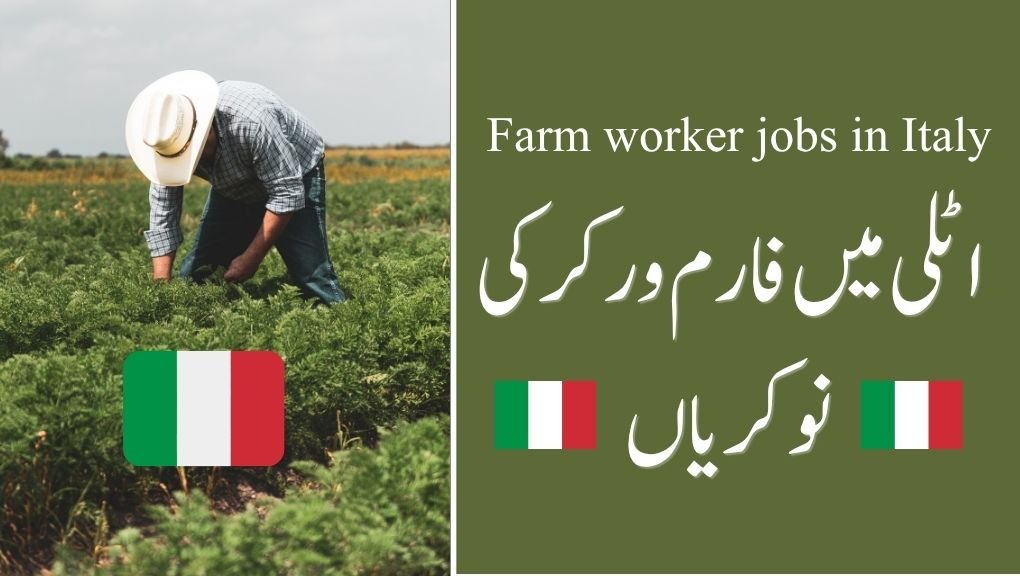
Italy is known for its agriculture, vineyards, fruit farms, vegetable farms, olive groves, and livestock businesses. Every year, farms need workers for planting, harvesting, sorting, packing, animal care, and other agricultural activities.
For people from outside the European Union, Italy also has a legal route for seasonal agricultural employment through its immigration quota system, known as the Decreto Flussi. For 2026, Italy has established quotas for seasonal workers in agriculture and tourism. The 2026–2028 program provides 497,550 total entries for work over three years, with 164,850 places allocated for 2026. The first 2026 click day for seasonal agricultural employment was scheduled for January 12, 2026.
This guide explains farm worker jobs in Italy, typical duties, salary factors, requirements, seasonal work visas, accommodation, working conditions, how to apply, and how to avoid fake job offers.
What Does a Farm Worker Do in Italy?
A farm worker performs practical agricultural tasks according to the type of farm and season.
Common duties can include:
- Planting seeds and young plants
- Preparing soil
- Watering crops
- Removing weeds
- Picking fruits and vegetables
- Harvesting grapes
- Sorting agricultural products
- Packing fruits and vegetables
- Cleaning farm areas
- Operating basic agricultural equipment
- Feeding livestock
- Cleaning animal areas
- Collecting eggs or agricultural products
- Helping with greenhouse work
- Loading and unloading farm products
- Maintaining tools and equipment
- Supporting experienced farm workers
The exact responsibilities depend on the employer and employment contract.
Types of Farm Worker Jobs in Italy
There is no single type of agricultural job. Workers can find different positions depending on their experience and the needs of the farm.
1. Fruit Picking Jobs
Fruit harvesting is one of the common forms of seasonal agricultural work.
Workers may pick and collect:
- Apples
- Grapes
- Oranges
- Peaches
- Pears
- Strawberries
- Cherries
- Olives and other agricultural products
The work can involve standing, walking, bending, carrying containers, and working outdoors.
2. Vegetable Farm Jobs
Vegetable farms may hire workers for planting, harvesting, cleaning, sorting, and packing.
Common products include tomatoes, onions, potatoes, peppers, lettuce, and other vegetables.
3. Vineyard Jobs
Italy has a large wine-producing sector, and vineyards require workers during different parts of the agricultural cycle.
Tasks may include:
- Vineyard maintenance
- Pruning
- Removing unwanted plants
- Harvesting grapes
- Carrying harvested grapes
- Sorting grapes
- General vineyard cleaning
4. Olive Farm Jobs
Olive farms can require workers for tree maintenance, harvesting, collecting olives, sorting, and other seasonal activities.
5. Greenhouse Jobs
Greenhouse workers may help with:
- Planting
- Watering
- Crop maintenance
- Harvesting
- Sorting
- Cleaning
- Packing
Greenhouse work can sometimes provide more protection from outdoor weather, although conditions vary by employer.
6. Livestock Farm Jobs
Some agricultural employers work with animals rather than crops.
Possible duties include:
- Feeding animals
- Cleaning animal areas
- Moving feed
- Collecting agricultural products
- General farm maintenance
- Helping experienced livestock workers
Previous livestock experience can be useful for these positions.
Farm Worker Salary in Italy
One of the most important questions for job seekers is how much a farm worker can earn in Italy.
There is not one nationwide legal minimum wage that applies to every worker in Italy. Pay is influenced by the applicable collective bargaining agreement, job classification, employment contract, working hours, and other factors. Italian employment rules require employers to provide information about remuneration and the applicable employment conditions.
Therefore, job seekers should not assume that every farm worker receives the same monthly salary.
A job advertisement should ideally explain:
| Salary Information | What to Check |
|---|---|
| Basic pay | Gross or net salary |
| Working hours | Normal weekly hours |
| Overtime | Whether overtime is available and paid |
| Contract | Seasonal, fixed-term or other contract |
| Accommodation | Free, subsidized or employee-paid |
| Meals | Included or not |
| Transport | Provided or not |
| Deductions | Taxes, social contributions and accommodation deductions |
| Payment | Monthly or another agreed schedule |
Gross Salary vs Net Salary
Always check whether the advertised amount is gross or net.
Gross salary is the amount before applicable deductions. Net salary is the amount the worker receives after deductions.
A job advertisement promising a specific amount of money should therefore be checked carefully before making travel or financial arrangements.
Are Farm Worker Jobs in Italy Seasonal?
Many agricultural jobs are seasonal because farms need additional workers during planting and harvesting periods.
The Italian immigration system specifically provides for seasonal employment in agriculture. For 2026, the seasonal-worker quota for agriculture and tourism is 88,000 workers, with additional quotas set for 2027 and 2028.
The duration of a job depends on:
- The crop
- The farming season
- Employer requirements
- Employment contract
- Immigration authorization
- The applicable legal rules
Some workers may therefore work for a few months, while other agricultural positions may have different arrangements.
Farm Worker Jobs in Italy for Foreign Workers
Non-EU citizens generally need the appropriate authorization and visa before entering Italy for employment.
Italy’s Ministry of Foreign Affairs explains that non-EU workers entering Italy for seasonal or non-seasonal employment generally enter within the quotas established by the Decreto Flussi. The employer in Italy must first request work authorization, known as a nulla osta al lavoro, from the relevant immigration office. After the authorization is issued, the worker can apply for the appropriate entry visa at the Italian diplomatic or consular mission.
This means a person should not simply travel to Italy on a tourist visa and start working on a farm.
Italy Farm Worker Visa Process
The general process for a non-EU seasonal agricultural worker can involve several stages.
Step 1: Find a Genuine Italian Employer
The first step is finding an employer that is legally able and willing to hire a foreign worker.
Be careful with agents who promise a guaranteed Italian job or visa in exchange for a large advance payment.
Step 2: Employer Applies for Work Authorization
The Italian employer normally starts the immigration process by requesting the required work authorization.
For workers entering under the quota system, the employer’s application is handled through the relevant Italian immigration authorities.
Step 3: Wait for the Required Authorization
The worker should wait for the official authorization before making major travel arrangements.
Do not rely only on screenshots, WhatsApp messages, or unofficial documents.
Step 4: Apply for the Italian Visa
After the required authorization is issued, the worker can apply for the relevant visa through the Italian embassy or consulate responsible for the worker’s place of residence.
Italy’s Ministry of Foreign Affairs states that visa applications are submitted to the Italian diplomatic or consular office covering the applicant’s registered residence.
Step 5: Travel to Italy
After receiving the appropriate visa, the worker can travel according to the visa conditions and complete the required procedures after arrival.
Farm Worker Jobs in Italy for Pakistani Workers
Pakistani citizens are among the nationalities included in the 2026–2028 seasonal-worker framework for agricultural and tourism employment.
However, being from an eligible country does not mean that a person automatically receives a job or visa.
A Pakistani applicant normally needs:
- A genuine employment opportunity
- An Italian employer
- The required work authorization
- The appropriate visa
- Valid travel documents
- Any additional documents requested by the relevant authorities
Applicants should always check current requirements with the Italian authorities and the Italian diplomatic mission responsible for their residence.
Farm Worker Jobs in Italy for Indian Workers
Indian citizens are also included among the nationalities listed for seasonal employment under the current Italian framework.
The same basic principle applies: eligibility for a quota does not itself create a job.
An applicant still needs an employer and must complete the appropriate immigration and visa procedures.
Education Requirements
Many basic farm worker positions do not necessarily require a university degree.
Depending on the position, an employer may look for:
- Physical ability to perform agricultural work
- Previous farm experience
- Reliability
- Ability to follow instructions
- Basic workplace communication
- Experience with harvesting or packing
- Experience with animals
- Experience using agricultural tools or machinery
Specialized machinery jobs can have additional requirements.
Is Italian Language Required?
Italian language requirements vary according to the employer and job.
For simple agricultural tasks, advanced Italian may not always be required. However, basic Italian can be extremely helpful for understanding:
- Work instructions
- Safety information
- Working hours
- Transportation arrangements
- Farm rules
- Communication with supervisors
- Emergency instructions
Learning basic Italian before traveling can make everyday life and workplace communication easier.
Working Hours for Farm Workers
Working hours depend on the employment contract, agricultural activity, season, weather, and applicable collective agreement.
Farm work can sometimes begin early in the morning, particularly during harvesting periods.
Before accepting a job, ask the employer for written information about:
- Start and finish times
- Weekly working hours
- Rest breaks
- Weekly rest days
- Overtime
- Holiday arrangements
- Payment schedule
Italian employment rules require workers to receive information about important employment conditions, including working time, remuneration, leave, job duties, and the duration of the employment relationship.
Accommodation for Farm Workers
Some farms may provide accommodation, while others do not.
Never assume that accommodation is automatically included.
Before accepting an offer, ask:
- Is accommodation provided?
- Is it free?
- If not, how much does it cost?
- Is electricity included?
- Is heating included?
- How many people share the accommodation?
- How far is it from the workplace?
- Is transportation provided?
These details should preferably be included in the employment documentation or confirmed in writing.
Benefits and Employment Rights
Legal employees in Italy have employment protections and social-security obligations associated with their employment.
For agricultural workers, social contributions are handled through the Italian social-security system. INPS publishes specific contribution information for agricultural workers.
The exact benefits available to a worker depend on the contract and applicable rules.
A worker should carefully review:
- Salary
- Social-security contributions
- Working hours
- Leave
- Contract duration
- Workplace safety
- Accommodation arrangements
- Overtime
- Insurance and other applicable protections
Farm Worker Safety
Agricultural work can involve physical risks.
Workers may encounter:
- Heavy loads
- Agricultural machinery
- Heat and sun exposure
- Chemicals or pesticides
- Uneven ground
- Animals
- Sharp tools
- Long periods of standing or bending
Employers should provide appropriate workplace safety measures according to the work being performed.
Workers should follow safety instructions and use required protective equipment.
Beware of Fake Italy Farm Job Offers
People looking for overseas employment should be particularly careful about fraudulent recruitment.
Warning signs include:
- Guaranteed visa promises
- Guaranteed jobs without an employer interview or contract
- Requests for large unexplained payments
- Fake-looking documents
- Pressure to pay immediately
- Requests to send money to a personal account
- No identifiable Italian employer
- No written employment conditions
- Claims that a tourist visa can be used to work legally
- Agents refusing to provide official information
Italy has also carried out enforcement operations against illegal agricultural employment and exploitation. In one 2024 agricultural inspection operation covering five provinces, authorities inspected 109 farms and found irregularities at 62 of them.
This is one reason applicants should use legal employment channels and verify employers carefully.
Documents You May Need
The exact document list depends on your nationality, residence, visa type, and individual circumstances.
Potential documents can include:
- Valid passport
- Employment information or contract
- Work authorization
- Visa application documents
- Passport photographs
- Proof of residence
- Supporting civil documents where required
- Additional documents requested by the Italian embassy or consulate
The Italian Ministry of Foreign Affairs advises applicants to check the official visa database and the diplomatic mission responsible for their residence because document requirements depend on the visa and individual circumstances.
How to Find Farm Worker Jobs in Italy
There are several legitimate ways to look for agricultural employment.
1. Check Italian Job Portals
Search for terms such as:
- Farm Worker
- Agricultural Worker
- Seasonal Farm Worker
- Fruit Picker
- Vineyard Worker
- Agricultural Labourer
- Greenhouse Worker
- Livestock Farm Worker
- Operaio Agricolo
- Bracciante Agricolo
- Lavoratore Stagionale Agricolo
2. Contact Employers Directly
When possible, verify the company or farm independently before sending personal documents or money.
3. Use Authorized Recruitment Channels
If you use a recruitment agency, verify whether it is legally authorized to provide recruitment services.
4. Check Government Information
Immigration and visa information should be checked through official Italian government sources rather than relying entirely on social media posts.
How to Apply for Farm Worker Jobs in Italy
A practical application process can look like this:
- Prepare a simple CV.
- Mention previous farm or agricultural experience.
- List skills such as harvesting, packing, livestock care, or machinery experience.
- Search for genuine Italian employers.
- Apply for suitable positions.
- Ask for written employment details.
- Verify the employer.
- Confirm whether the position is seasonal.
- Confirm salary and working hours.
- Confirm accommodation arrangements.
- If selected, allow the employer to complete the required immigration process.
- Apply for the appropriate visa after the required authorization.
- Travel only after receiving the appropriate legal permission.
Simple CV Example for a Farm Worker
A farm worker CV does not need to be complicated.
Include:
Name: Your full name
Nationality: Your nationality
Current Location: Your city and country
Work Experience: Previous farm, harvesting, packing or agricultural work
Skills: Fruit picking, planting, vegetable harvesting, livestock care, packing, etc.
Languages: Languages you can speak
Availability: Seasonal or full-time availability
Contact: Email and appropriate phone number
Do not add false qualifications or fake work experience.
Advantages of Working on an Italian Farm
Farm work may provide an opportunity to gain international work experience and learn new agricultural skills.
Potential advantages can include:
- Legal employment experience
- Experience in European agriculture
- Seasonal employment opportunities
- Opportunity to learn agricultural techniques
- Exposure to Italian workplaces
- Possible accommodation depending on the employer
- Experience that may be useful for future agricultural employment
However, conditions vary considerably between employers and contracts.
Challenges of Farm Work in Italy
Farm work is physically demanding and is not suitable for everyone.
Potential challenges include:
- Long periods outdoors
- Hot weather
- Physical lifting
- Repetitive work
- Early morning schedules
- Seasonal employment
- Living in rural areas
- Limited public transportation in some locations
- Language barriers
- Variable workloads depending on the agricultural season
Applicants should understand these conditions before accepting an offer.
Important Questions to Ask an Employer
Before accepting an Italian farm job, ask the employer:
- What is the exact job title?
- Where is the farm located?
- What is the contract duration?
- Is the job seasonal?
- What is the gross salary?
- How are wages paid?
- How many hours will I work?
- Is overtime available?
- Is accommodation provided?
- How much does accommodation cost?
- Are meals included?
- Is transportation provided?
- What are the exact job duties?
- Who handles the work authorization?
- What documents will I receive?
Getting answers in writing can help prevent misunderstandings.
Italy Farm Worker Jobs 2026: Important Immigration Information
For people planning to work in Italy during 2026, immigration rules and quota availability are particularly important.
Italy’s official 2026–2028 Decreto Flussi program provides a total of 497,550 work-entry places over three years, including 164,850 for 2026. The first 2026 click day specifically for seasonal agricultural employment was scheduled for January 12, 2026.
The seasonal quota includes citizens of several countries, including India and Pakistan, among others.
Because immigration procedures can change, applicants should verify the latest information before paying an agent, submitting documents, or making travel arrangements.
Frequently Asked Questions
Can foreigners get farm worker jobs in Italy?
Yes. Italy has a legal system allowing certain non-EU workers to enter for seasonal employment, including agricultural work, subject to the applicable quotas and immigration procedures.
Can Pakistani citizens apply for Italian farm jobs?
Pakistani citizens are included among the nationalities listed for seasonal agricultural employment under the current 2026–2028 framework. However, applicants still need an eligible job and must complete the required immigration and visa process.
Can Indian citizens apply for farm jobs in Italy?
Indian citizens are also listed among the eligible nationalities for the relevant seasonal-worker quotas. Eligibility does not guarantee employment or visa approval.
Do I need a degree to work on a farm?
Many basic farm jobs do not require a university degree. Employers may instead focus on practical experience, physical ability, reliability, and relevant agricultural skills.
Can I work in Italy on a tourist visa?
A tourist visa is not a substitute for the appropriate authorization to work. Non-EU employment normally requires the applicable work authorization and employment visa process.
Is accommodation free?
Not necessarily. Some employers may provide accommodation, while others may charge the worker or provide no accommodation. Always confirm the arrangement before accepting the job.
Is Italian language required?
It depends on the employer and position. Basic Italian is useful for communication and workplace safety even when advanced language skills are not required.
Are farm jobs permanent?
Many agricultural positions are seasonal. The contract should clearly state its duration and conditions.
How can I avoid fake farm job offers?
Verify the employer, request written employment information, avoid unexplained advance payments, and confirm immigration procedures through official Italian sources.
Final Thoughts
Farm worker jobs in Italy can include fruit picking, vegetable harvesting, vineyards, olive farms, greenhouses, livestock farms, and agricultural packing. For non-EU workers, however, getting a legal job involves more than simply finding an advertisement.
The employer, work authorization, immigration quota, employment contract, and visa process are all important.
For 2026, Italy’s Decreto Flussi provides specific routes for seasonal agricultural workers, including eligible workers from countries such as Pakistan and India.
Before accepting any offer, carefully check the employer, salary, contract duration, working hours, accommodation, deductions, and immigration paperwork. Most importantly, do not pay money based solely on a social-media advertisement or an agent’s promise of a guaranteed visa.
Information note: Immigration quotas, visa procedures, employment rules, and recruitment arrangements can change. Applicants should confirm the latest requirements with the Italian Ministry of Foreign Affairs, Ministry of the Interior, relevant Italian authorities, and the Italian diplomatic mission responsible for their residence before making decisions or payments.