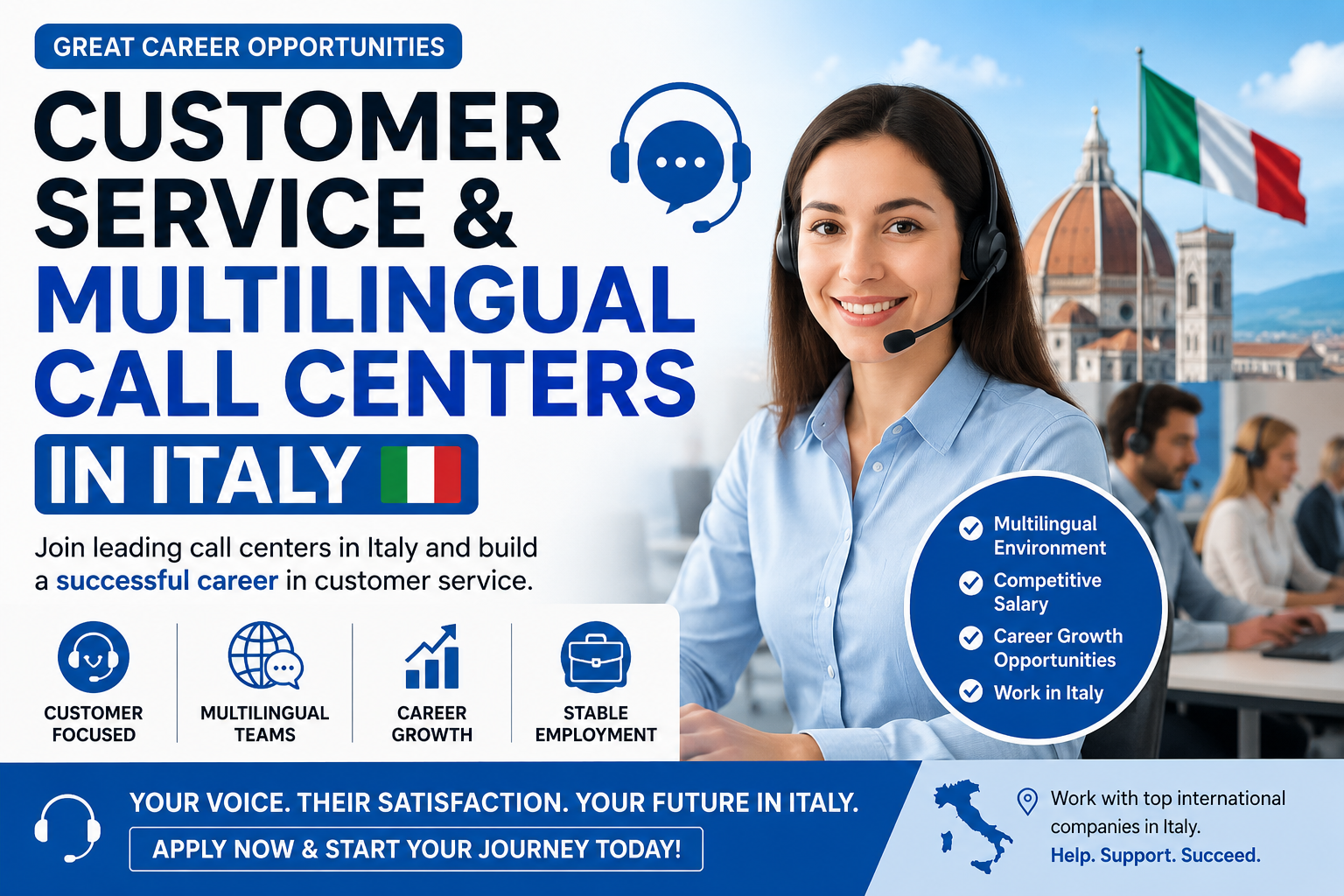
Italy’s economic landscape is evolving beyond its traditional manufacturing base. Today, major industrial hubs like Milan and Turin are rapidly transforming into critical hubs for European Business Process Outsourcing (BPO). This shift is driving an unprecedented demand for qualified customer service and multilingual call center professionals.
For international expats seeking legal employment in Italy, this sector provides one of the most stable and accessible entry points. Companies operating across Europe require native or fluent speakers of German, French, English, Spanish, and Nordic languages to manage their regional client relations, technical support, and business development pipelines.
This comprehensive guide covers everything you need to know about multilingual jobs in Italy, including average salaries, top hiring hubs, visa requirements, and the specific skillsets in highest demand.
Why Multilingual Customer Service Attracts Expats to Italy
The primary barrier to entry for foreign workers in many Italian sectors is the local language requirement. However, in international corporate hubs, the value of native language proficiency in foreign markets often outweighs the immediate need for fluent Italian.
+-----------------------------------------------------------------------+
|                    THE ITALIAN MULTILINGUAL MARKET                     |
+-----------------------------------------------------------------------+
|  Primary Drivers            |  Target Industries                      |
|  • Native Language Value    |  • FinTech & Banking                    |
|  • Low Italian Requirement  |  • E-commerce Logistics                 |
|  • Stable Corporate Hours   |  • SaaS & Technical Support             |
+-----------------------------+-----------------------------------------+
                                  |
                                  v
+-----------------------------------------------------------------------+
|                      EXPAT CAREER ADVANTAGES                          |
|  • Streamlined Visas       • Corporate Training     • Career Mobility |
+-----------------------------------------------------------------------+
Key Factors Driving Expat Recruitment
- High Demand for Niche Languages: Native speakers of languages like Dutch, Swedish, Danish, or complex dialects of Spanish/German are critically scarce in Italy, leading to accelerated recruitment for those who possess these skills.
- Stable Corporate Environment: Unlike seasonal hospitality or agricultural roles, BPO and customer support jobs offer stable, year-round contracts with standard corporate hours (usually Monday to Friday).
- Clear Career Progression: Most international call centers and BPO providers in Italy maintain structured internal promotion pathways into team leadership, quality analysis, training, and management.
Top Italian Cities for Multilingual Jobs
While customer service roles exist across Italy, the vast majority of international BPO activity is concentrated in the industrialized North.
1. Milan: The Finance & Tech Capital
Milan is Italy’s primary economic engine and the main hub for international corporations.
- Industries Hiring: FinTech, e-commerce, software-as-a-service (SaaS), and high-end luxury customer relations.
- Language Demand: Exceptional need for native English, German, French, and a high concentration of Nordic languages (Dutch, Swedish).
2. Turin: The Engineering & Logistics Hub
Traditionally known for automotive manufacturing, Turin has pivoted to host numerous shared service centers.
- Industries Hiring: Automotive logistics, shared service centers (HR/Finance), technical helpdesk support, and retail logistics.
- Language Demand: Strong need for native French, German, Spanish, and English.
Salary Benchmarks for Multilingual Staff in Italy
Salaries in Italian call centers are typically governed by National Collective Labor Agreements (CCNL). Base pay is structured by seniority, but multilingual staff frequently receive a significant “language bonus” (superminimo) based on the rarity and business critical nature of their native language.
| Multilingual Role / Specialization | Estimated Monthly Net Salary | Target Language(s) / Bonuses |
|---|---|---|
| Multilingual Customer Advisor (Entry) | €1,200 – €1,800 | Spanish, French, English (Base Pay) |
| Senior Multilingual Technical Support | €1,600 – €2,300 | German, Nordic, Dutch (Language Bonus) |
| B2B Account Manager (Foreign Market) | €1,900 – €2,700+ | All Target Languages (Commission Structure) |
| Multilingual Team Leader (Supervisor) | €2,100 – €3,000+ | Multilingual Management Experience |
Hiring Requirements and Essential Skillsets
Recruiters for multilingual roles prioritize native communication skills and soft skills over advanced university degrees or previous BPO experience.
+--------------------------------------------------------------------+
|               MULTILINGUAL EXPAT APPLICANT CHECKLIST                |
+--------------------------------------------------------------------+
|  [Step 1] Native or C2-level proficiency in the target language     |
|                            │                                       |
|                            ▼                                       |
|  [Step 2] Strong Soft Skills: Empathy, Patience, and Problem-Solving|
|                            │                                       |
|                            ▼                                       |
|  [Step 3] Strong Technical Soft Skills (CRM, IT Troublehooting)     |
|                            │                                       |
|                            ▼                                       |
|  [Step 4] Working knowledge of English or basic Italian (Internal) |
+--------------------------------------------------------------------+
Key Hiring Criteria
- Language Proficiency: Native or equivalent C2-level mastery of German, French, Nordic languages, or Dutch. Excellent written and verbal communication is mandatory.
- Problem-Solving & Empathy: Modern call centers focus on high-quality interactions (FCR—First Call Resolution), rather than high call volume. Empathy and active listening are vital for customer satisfaction.
- Technical Aptitude: Experience with modern CRM platforms (Salesforce, Zendesk), basic IT troubleshooting, and strong typing speed provide a significant competitive advantage.
Work Visas and Residency Pathways for Expats
Navigating Italian bureaucracy is a major consideration for non-EU applicants. While European Union citizens can work without a visa, several legal pathways exist for non-EU expats:
- National Work Visa (Decreto Flussi / Quota Pathway): Applied for when an Italian BPO provider directly sponsors a non-EU citizen. The company must demonstrate that they cannot find a qualified Italian or EU candidate for the language role.
- Student Visas with Work Rights: Non-EU students enrolled in Italian universities or long-term language institutes can legally work up to 20 hours per week, making them ideal for part-time multilingual roles.
- Working Holiday Visas: Citizens from countries with reciprocal agreements (e.g., Canada, Australia, New Zealand) can obtain short-term work authorization that allows them to hold call center positions.
Frequently Asked Questions (FAQs)
Do I need to speak fluent Italian to work in a multilingual call center in Italy?
In most international hubs (especially Milan and Turin), complete Italian fluency is not strictly required. The entire customer interaction is conducted in your native language. However, some basic conversational Italian is highly beneficial for internal communication and daily life in Italy.
Are call center jobs in Italy seasonal?
Unlike tourism or agriculture, the corporate BPO and customer service sector operates year-round. While occasional seasonal spikes occur (e.g., e-commerce logistics during winter holidays), the vast majority of positions offered are long-term, stable contracts (tempo indeterminato).
What languages are in highest demand right now in Italy?
Currently, native German speakers remain the most challenging and critical requirement. There is also consistent high demand for French, Nordic languages (especially Dutch and Swedish), and native English (for UK/US markets).
Building a career in customer service and multilingual call centers in Italy offers international workers strong earning potential, stable long-term contracts, and genuine career progression opportunities. By matching native language expertise with top corporate hubs like Milan and Turin, and strategically utilizing legal visa pathways, expats can build a rewarding professional life in the Italian service economy.